


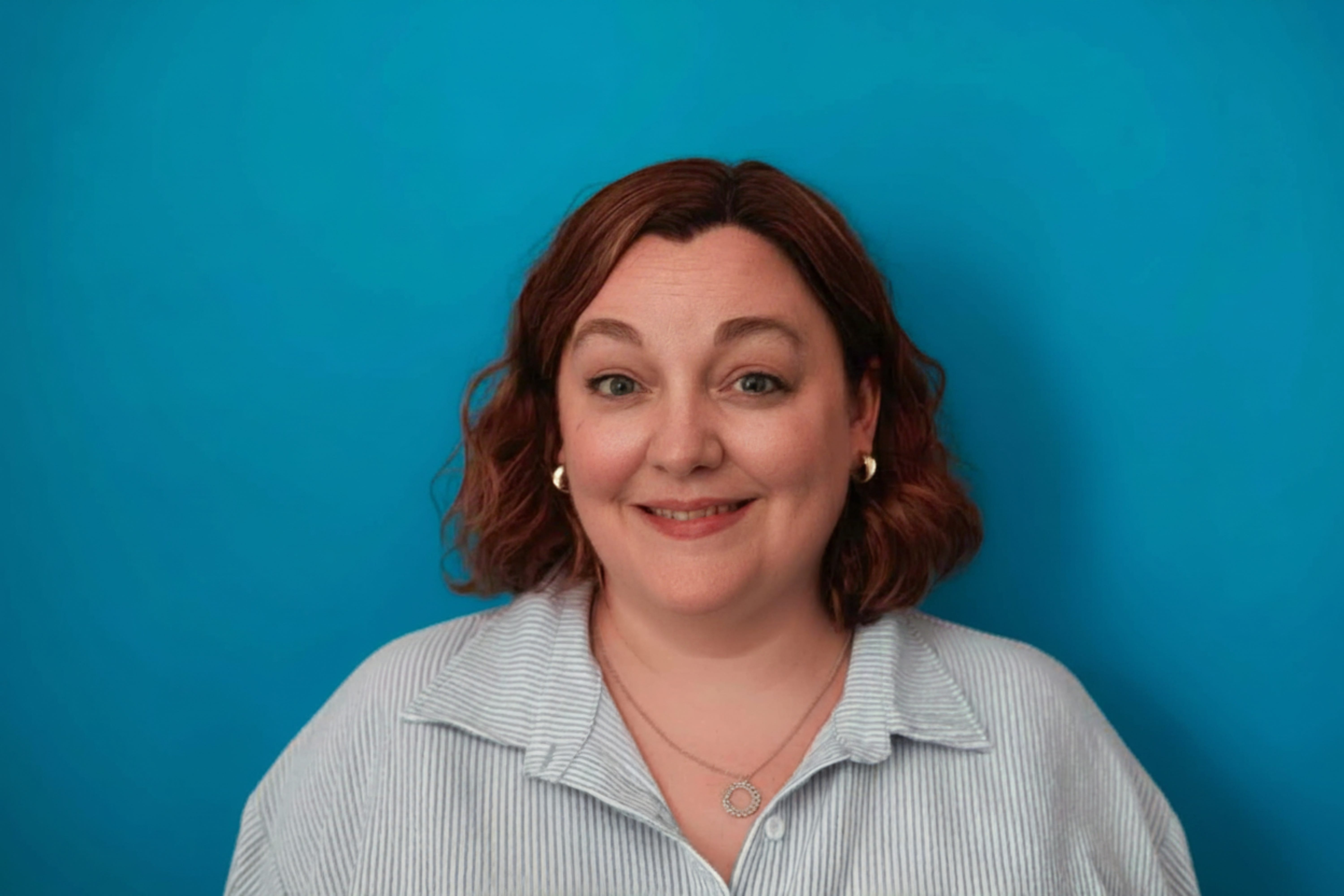
Heather Armstrong turned 45 in May. If you look at her life on paper, the timeline is a lot to hold.
Crohn’s disease at 28. A bowel perforation that no one caught. Years of heavy bleeding, she didn’t know was abnormal. A heart attack at 42 with no traditional risk factors. Endometriosis and adenomyosis were diagnosed after more than a decade of overlapping symptoms. A hysterectomy at 44.
Having a health story of her own to speak about, Heather reached out to me after I put out Seena’s health story on LinkedIn. And this is exactly why I started Her Health Story — enabling women to recognise themselves in each other’s stories.
Heather has spent nearly two decades in healthcare technology. She is also the founder of Anyway Life, a platform built on the belief that life does not wait for perfect health.
After having read her story, Heather is also one of the clearest voices I have come across when it comes to naming what women with complex, chronic conditions are actually up against.
This is her health story.
1. If you could write your entire health story in a couple of sentences, what would it say?
Unfortunately, my story is not unique.
I was diagnosed with Crohn’s disease in 2009 after months of being sick, scared, and trying to navigate a healthcare system that no one teaches you how to navigate, all while raising my son as a single mother and worrying what my future would look like.
Over the next 15 years, I learned how often women are told they’re “fine” despite constant pain, exhaustion, and worsening symptoms. After a heart attack at 42 with no traditional risk factors, followed by diagnoses of fibromyalgia, endometriosis, and adenomyosis that ultimately led to a hysterectomy.
I was left wondering how much suffering I had normalized simply because no one connected the dots sooner.
2. Take us back to 2009. You were young, navigating life as a single mum, when you started experiencing abdominal pain that took six months to receive a diagnosis. What was that waiting period like, carrying all of that at once? What happened during the colonoscopy that made an already overwhelming moment even harder?
I was terrified. I genuinely thought I was dying. By the time I finally had the colonoscopy, I had spent months on liquid diets, missing work, losing weight, and living in constant pain, but I thought the waiting was normal because no one told me otherwise.
No one told me to call if things got worse, ask to be put on a cancellation list, or seek another opinion to get the procedure sooner.
I had already been hospitalized that June after a CT scan found an abscess. I spent about a week in the hospital with no food, only IV fluids, and was still sent home to continue waiting for the colonoscopy that wouldn’t happen until September.
I trusted that if it were truly urgent, someone would tell me.
The day of the colonoscopy only added to the fear and exhaustion. My procedure was scheduled for 10 a.m., but the doctor was running hours behind, and I didn’t get taken back until almost 1 p.m. When I woke up, I was in significantly more pain than I had been before the procedure. The nurses were rushing me to get dressed because they wanted to go home for the day. I could barely stand upright, but they told me it was “just the air” and said to buy Mylicon drops on the way home.
I trusted them, so I went home.
By the time I got to my apartment, I needed help getting inside because I could barely walk. I tried drinking a protein shake and immediately threw it up. I couldn’t even keep water down. Looking back now, I absolutely should have gone straight to the ER, but I was 28 years old and a single mother to a six-year-old boy. I didn’t want to wake him up in the middle of the night and drag him to the emergency room. So I decided I would wait until morning after I took him to school.
The next morning, I had the fastest ER check-in of my life. I walked in hunched over, clutching my colonoscopy paperwork, struggling to stay upright. Within minutes, I was in a room with IV fluids running and what felt like every tube of blood imaginable being drawn. Imaging confirmed that my bowel had perforated during the colonoscopy.
Then they asked me if I had a colorectal surgeon I wanted them to call.
At 28 years old, it felt like the most surreal question in the world. Did people my age have colorectal surgeons on speed dial? I certainly didn’t.
Thankfully, the surgeon on call was Dr. Jay Singh. Instead of rushing me immediately into surgery, he decided to monitor me closely for 24 hours to see whether my body could stabilize on its own. Once again, I was admitted to the hospital with no food, only IV fluids, terrified that the nightmare I had been living for months was somehow still getting worse.
Dr. Singh became a bright spot in all of it. My white blood cell count started coming down the next day, exactly as he had hoped, and he continued treating me conservatively so my bowel could heal without surgery. At my follow-up appointment after discharge, he told me that if he had operated immediately, the amount of inflammation in my intestines would have likely required a full ileostomy because there wasn’t enough healthy tissue to reconnect safely. I remember sitting there, realizing how close my life had come to looking completely different.
Dr. Singh was also a professor at Emory, and he later asked if he could include my case in his teaching materials as an example of when waiting and trying another intervention before surgery could matter.
Ironically, after everything that happened, when I followed up with the gastroenterologist who performed the colonoscopy, I still left without a diagnosis or treatment plan.
The only reason I eventually found answers was that I happened to work for an EMR company at the time. A colleague shared what happened to me with one of our physician clients, and that doctor helped get me in with a different GI specialist. My second gastroenterologist, Dr. Dalton, was able to diagnose Crohn’s disease from the original colonoscopy images and finally gave me a path forward for treatment and healing.
Dr. Singh and Dr. Dalton saved my life.
But the experience also fundamentally changed how I see healthcare. I realized how much patients are expected to navigate alone, even in moments when they are exhausted, scared, and simply trying to survive.
3. After your diagnosis, you weren’t referred to a nutritionist. Which is considered pretty fundamental for anyone managing Crohn’s. What did that gap in your care cost you, and how did you eventually figure things out on your own?
It cost me years of trial and error and a really unhealthy relationship with food. People don’t often talk about what it does to your mental health when eating, something so fundamental to survival and connection, becomes something you’re afraid of. For a long time, every meal felt like a gamble between nourishment and pain.
Over time, I slowly learned that during flares, many of the foods people traditionally think of as “healthy” were actually some of the hardest on my body. Raw fruits and vegetables, high fiber foods, and heavier meats would often make the inflammation worse. I learned I needed foods that were easier to digest, things like fish instead of red meat, cooked vegetables instead of raw ones, and sometimes even blended foods when things were particularly bad.
None of that came from a nutritionist or structured care plan. It came from years of googling, talking to other Crohn’s patients, experimenting on myself, and conversations with my gastroenterologist, Dr. Dalton.
I also spent years dealing with nutritional deficiencies before I fully understood how connected they were to Crohn’s disease and the damage in my small intestine. I have scar tissue in my ileum, which plays a major role in absorbing nutrients, so over time, I learned I regularly needed supplementation for things like vitamin D with K2, B12, magnesium, and iron because my levels would repeatedly fall low or become suboptimal.
Looking back now, I think it highlights one of the biggest gaps in chronic illness care in the U.S. Our healthcare system is still built primarily around episodic treatment instead of long-term disease management and prevention.
Between that mindset and the way insurance defines “medical necessity,”
patients can receive a life-changing diagnosis like Crohn’s disease without automatically being connected to nutrition support or mental health support, even though both are fundamental to learning how to live with the disease.
4. Almost a decade later, you started experiencing heavy periods and fatigue. You eventually learned you had endometriosis and adenomyosis. During this phase of diagnosis, you mentioned you didn’t even realise your bleeding was abnormal until you spoke to a doctor. How does that happen? What does it say about how women are taught, or not taught, to understand their own bodies?
It took more than a decade after my Crohn’s diagnosis to learn that I also had endometriosis and adenomyosis.
What shocked me most during that process was realizing that I didn’t actually know what a “normal” period was supposed to look like because no one had ever taught me.
I had dealt with anemia on and off since puberty, painful cycles, heavy bleeding, and debilitating fatigue for so long that I assumed it was just how my body worked.
It wasn’t until things escalated to having a period every three weeks that lasted a full week at a time that I finally realized something was seriously wrong. Looking back, I think a huge part of the problem is that most of us
were taught about periods through the lens of sex education, not women’s health.
We were taught that periods happen, but not what is normal, what isn’t, what symptoms should raise concern, or when pain and bleeding cross the line from inconvenient to medically significant.
I got my first period at 12 years old and had my hysterectomy at 44. That’s 32 years of pain, anemia, exhaustion, and symptoms before I fully understood that what I was experiencing wasn’t normal. After my surgery, I found out that lesions and uterine tissue were impacting my colon, my bladder, and my abdominal wall. There was a lot of scar tissue that was cleaned up during the total robotic hysterectomy I had.
I also think this becomes even more complicated once you already have a chronic illness diagnosis like Crohn’s disease, because everything starts getting filtered through that lens. The symptoms overlap so heavily that it becomes easy for both patients and providers to attribute everything to the condition you already have. There were so many moments over the years where my labs looked “fine,” or my intestinal symptoms weren’t particularly active, and I wish I had pushed harder for doctors to keep looking instead of accepting that feeling terrible was simply my new normal.
5. There’s a history of hysterectomies in your family. Women in your family didn’t even know whether the hysterectomies were related to conditions such as endometriosis. How much of that family silence shaped how you approached your own symptoms?
It definitely played a role, although I never expected a hysterectomy would eventually be part of my own story.
Growing up, I noticed a pattern in my family that almost became a dark joke. The women with larger busts seemed to develop breast cancer, and the women with smaller busts seemed to end up having hysterectomies. But despite how common both experiences were, there was very little conversation about what symptoms led to those diagnoses, how they knew something was wrong, or what younger women in the family should actually watch for.
I think that silence shapes more than we realize.
Women’s health, especially anything related to periods, pelvic pain, or reproductive health, is still treated as somewhat taboo. We’re taught how to discreetly hide a tampon on the walk to the bathroom before we’re taught what excessive bleeding looks like or when pain is no longer considered normal. That messaging gets internalized.
Looking back now, I think many women are conditioned to believe that pain is simply part of being a woman. Heavy periods, anemia, debilitating cramps, exhaustion, pain during ovulation, we normalize so much of it because generations before us normalized it too. When no one talks openly about their symptoms or experiences, it becomes incredibly hard to recognize when your body is trying to tell you something is actually wrong.
6. Crohn’s and endometriosis are both chronic inflammatory conditions. You’ve experienced doctors attributing everything to whichever diagnosis came first. How frustrating is it to have a complex health history and still feel like no one is looking at the full picture?
It’s incredibly frustrating. I joke sometimes that I’m not just the patient, I’m also the care coordinator, the historian with the only complete version of my medical story, and the person responsible for proving my symptoms are real.
Modern medicine, for better or worse, has divided the body into systems and specialties, so it often feels like no one is truly managing the full picture except the patient themselves.
Every surgery, procedure, or medication change turns into me manually coordinating between specialists. I’m the one sending messages asking whether medications need to be paused, whether they’ll impact healing, and whether one condition changes how another should be treated. I know to ask those questions because I work in healthcare technology and understand how fragmented the system is, but I think all the time about the patients who don’t know they’re supposed to ask.
Episodic care simply doesn’t work well for people with chronic illness.
It becomes exhausting having to repeatedly explain your history, reestablish credibility, and advocate for yourself every single time you walk into a new appointment. And when your symptoms don’t show up clearly on tests or can easily be attributed to a condition you already have, it becomes even easier for things to be dismissed or overlooked.
What makes it even more complicated is that I’m actually fortunate in many ways. I live in a major city with access to specialists who regularly treat chronic illness. I often think about how much harder this must be for people in rural communities or areas with limited access to experienced providers. Chronic illness can feel incredibly isolating. There are moments where the constant navigation, explaining, coordinating, and fighting to be heard leaves you wondering if you’ll ever truly feel well again.
7. Two years ago, you had a heart attack. Your symptoms were initially flagged as anxiety. Can you walk us through that experience, because it is one of the most dangerous and well-documented failures in women’s healthcare?
Two years ago, I had a heart attack at 42 years old despite having none of the traditional risk factors people typically associate with heart disease. No high blood pressure. No high cholesterol. No smoking history. I was relatively young, active, and honestly never imagined I could have a cardiac event.
Which is part of why the experience was so frightening.
What I remember most clearly is knowing something was wrong in my body while simultaneously questioning myself because of how the symptoms were framed around me. The symptoms didn’t present like the dramatic movie version of a heart attack that people are taught to look for. It wasn’t sudden crushing chest pain and collapse. It was pressure, pain, exhaustion, nausea, and a feeling that something was deeply wrong.
But as a woman, especially one with a complex health history, there’s often this subtle messaging that maybe you’re overreacting, maybe it’s stress, maybe it’s anxiety.
And when anxiety gets introduced into the conversation, it changes the way you start questioning yourself in real time.
Thankfully, I eventually received the care I needed, but the experience fundamentally changed the way I think about women’s healthcare and diagnostic bias. We now have years of research showing that women’s cardiac symptoms are more likely to be minimized, misattributed, or missed entirely, yet so many women still don’t know that heart attacks can look very different in women than they do in men.
What makes it even harder is that chronic illness patients become very practiced at functioning while unwell.
You normalize pain. You normalize fatigue. You normalize pushing through symptoms because if you stopped every time something felt wrong, you’d never fully participate in your own life. I think that conditioning can become dangerous because by the time many women seek emergency care, they’ve already spent hours or days trying to convince themselves they’re probably okay.
Looking back now, I realize how much emotional energy women spend trying to determine whether our symptoms are serious enough to deserve care. That’s an exhausting and dangerous burden to carry.
8. The soft plaques that lead to your heart attack had no clear cause identified. How do you sit with that level of uncertainty, especially after everything else you have already been through?
At first, it was terrifying. I felt like my body had become a ticking time bomb. While I was in the hospital waiting for my robotic CABG surgery, I remember asking my doctors over and over again, “How did this happen?” I was at a top hospital with specialists using advanced robotic techniques, and even they couldn’t give me a definitive answer. That uncertainty was incredibly hard to process because if the experts couldn’t explain it, how was I supposed to feel safe in my own body again?
I’m thankful the ER protocol made the doctor run the tests. If he’d sent me home, my widow maker would eventually have killed me.
My specialists went back and forth about whether chronic inflammation from Crohn’s disease, inflammatory arthritis, or autoimmune disease itself could have contributed to the soft plaques that caused the heart attack. But there was never a clear answer.
I think one of the hardest parts of living with chronic illness is learning that medicine does not always have certainty, even when we desperately want it to.
I eventually went back to therapy and spent a lot of time working on radical acceptance. I had to come to terms with the fact that I might be one of those patients whose experience exists in the gray areas of medical understanding. That was emotionally difficult because we want healthcare to feel definitive and predictable, but sometimes it simply isn’t.
One thing that helped me emotionally was deciding to participate in research instead of only sitting in fear. I volunteered for a study at Emory University focused on stress responses in women who experience cardiac events. I hoped that even if doctors couldn’t fully explain or prevent what happened to me, maybe my experience could contribute to a better understanding for the next woman.
It’s still scary sometimes. I don’t think that ever fully disappears after a major cardiac event. But I also believe that the more openly we talk about chronic illness, inflammation, women’s health, and the ways symptoms are often overlooked, the more we make invisible experiences visible. And visibility is where better research, better care, and better outcomes begin.
9. You talked about learning to advocate for yourself differently, by being very specific and concrete. An example you gave was saying things like I used to be able to walk 20,000 steps relatively easily, and now walking from the living room to the kitchen is too much. When did you learn to speak that language? Do you think that, as women, doing so is essential?
I learned it through trial and error.
The moment that really changed things for me was after a trip to Disney with my family. Just two months earlier, I had been walking over 20,000 steps a day without much difficulty, but by the time I saw my rheumatologist, walking from the living room to the kitchen felt overwhelming. I happened to explain it in those terms, and I noticed immediately that it changed the conversation.
He paid closer attention because I had provided context that translated my symptoms into a measurable change in function and quality of life.
That experience taught me that specificity matters in healthcare. Saying “I’m tired” or “I’m in pain” is real and valid, but it can mean very different things to different people. Explaining how your life has changed in concrete ways gives providers a clearer picture of what’s actually happening to your body.
It’s still subjective information, but now it’s anchored to lived function, which often helps clinicians better understand severity and urgency.
I do think learning to communicate that way is essential, especially in today’s healthcare system, where most appointments are incredibly short. Patients are often trying to summarize weeks, months, or years of symptoms in five or ten minutes. Learning how to frame symptoms in a way that aligns with clinical training can genuinely help patients get to answers faster. I wish we didn’t have to become fluent in “medical communication” to be heard, but the reality is that it often makes a difference.
10. You used the phrase “radical acceptance” when it comes to your health. What does that actually mean when you are living with this level of complexity in your body, and how do you find that without it tipping into resignation?
For me, radical acceptance means accepting that there may not always be a clear medical answer for everything happening in my body while still believing I deserve the best quality of life possible.
It’s not resignation, and it’s not giving up. It’s recognizing that medicine is still evolving, doctors are human, and sometimes patients live in the gray areas of what science fully understands today.
What this changed for me was moving away from spending all of my energy fighting the reality of what was happening and instead focusing on collaboration, adaptation, and advocacy. If a doctor is willing to work with me, problem-solve, and help improve my quality of life, I’ll meet them halfway. If they dismiss me or stop being curious, then I’ve learned it’s okay to find another provider because living with multiple chronic conditions is incredibly complex.
Don’t get me wrong – I have bad days too. Some days are harder than others, but healing isn’t linear, and I also hold onto a lot of hope.
We are learning more every year about inflammation, autoimmune disease, women’s health, and the connections between systems in the body. Last year, a Nobel Prize was awarded for advancements related to autoimmune disease treatment and understanding. That matters because it reminds me that just because medicine doesn’t have every answer today doesn’t mean those answers won’t exist tomorrow.
Radical acceptance, for me, is learning to live fully in the meantime. It’s acknowledging uncertainty without allowing it to consume my entire life. I still travel. I still make plans. I still pursue joy and meaning and connection while also advocating fiercely for my health. Both things can exist at the same time.
11. You mentioned feeling lucky to be in a city where referrals are accessible, along with how strange it is that basic healthcare access even feels like luck. What does that say about the system as a whole for women seeking healthcare for themselves?
I think it says that healthcare access in the United States is far more dependent on geography, privilege, education, and persistence than most people realize. The fact that I feel “lucky” to live in a city with access to specialists, major hospital systems, and physicians experienced in chronic illness says a lot about how uneven the system really is. Access to quality care shouldn’t feel like winning a lottery based on your zip code.
Even with that access, I still spent years trying to get answers while navigating fragmented care, long waits, insurance barriers, and symptoms being minimized or explained away. So I think often about women who don’t have access to large healthcare systems, who can’t afford to see multiple specialists, who can’t take time off work, or who live in rural communities where there may not even be providers experienced in conditions like Crohn’s disease, endometriosis, or autoimmune disorders.
Women’s healthcare also still requires an enormous amount of self-advocacy.
Many women are balancing careers, caregiving, finances, and family responsibilities while simultaneously trying to convince people that their pain, fatigue, bleeding, or symptoms deserve attention. That’s exhausting. And the emotional burden of constantly needing to advocate for yourself inside the healthcare system is something we don’t talk about nearly enough.
I think the larger issue is that our healthcare system was not really designed around longitudinal, whole-person care. It’s designed around episodes, specialties, billing structures, and short appointments.
But chronic illness, especially for women, rarely fits neatly into those boxes. When access to coordinated, compassionate, knowledgeable care feels like luck instead of the standard, it highlights just how much work still needs to be done.
12. As women, we are often made to feel like we are overreacting or being hysterical when it comes to our health. How many times has that happened to you, and what is the cumulative effect of being doubted over and over again?
It’s happened more times than I can count, including with doctors I genuinely believe are good people and good physicians. That’s part of what makes it so complicated. I don’t think most doctors go into medicine intending to dismiss or gaslight patients, but there are still very real biases embedded in medical training, research, and healthcare systems, especially toward women and marginalized groups.
There were absolutely moments where I started questioning myself because I had been told so many times that nothing was wrong or that my labs looked “fine.”
You start wondering if maybe it really is stress, anxiety, or somehow all in your head.
Thankfully, I have family and close friends who reminded me otherwise because they saw the reality of what I was living with every day. They saw the pain, the fatigue, the limitations, and the impact on my life, even when tests didn’t fully explain it.
I think the cumulative effect of being doubted over and over again is that it slowly erodes your trust in your own body and instincts.
And that’s dangerous because patients know when something has fundamentally changed in their body, even if they don’t yet have the medical language to explain it.
What I eventually learned is that, until the system changes, patients often have to learn how to activate different parts of a physician’s training to be heard. That’s why I started becoming much more specific and concrete about changes in my quality of life, function, and symptoms. It still places an unfair burden on the patient, but it can help move conversations forward.
I also learned to keep asking questions. What else could this be? What else can we test? What other options exist? My quality of life matters. I think that’s part of why I speak openly about my experiences now. Healthcare systems change slowly,
but if sharing what I’ve learned helps another woman recognize her symptoms earlier, advocate for herself faster, or feel less alone in the process, then at least something meaningful comes from it.
13. You spent over two decades in healthcare technology, with more than fifteen years navigating the system as a patient yourself. That intersection became Anyway Life, built on the belief that life doesn’t wait for perfect health. What finally made you turn all of that lived experience into something you could offer others? How has your own health journey shaped what you are building?
I think Anyway Life was born out of the realization that there is an enormous gap between receiving healthcare and actually knowing how to live with illness. After spending more than two decades working in healthcare technology and over fifteen years navigating the system as a chronic patient myself, I realized that some of the hardest parts of illness aren’t always the medical decisions; they’re the navigation, the coordination, the uncertainty, and the emotional weight of trying to keep living your life while managing all of it.
For years, I kept noticing that I had developed skills as a patient that other people around me didn’t know they were supposed to have.
How to prepare for appointments.
How to communicate symptoms clearly.
How to coordinate between specialists.
How to recognize when something deserves another opinion.
How to navigate insurance, medications, procedures, and the invisible emotional labor that comes with chronic illness and caregiving.
I realized no one actually teaches people how to be a patient, yet we expect them to navigate one of the most complex systems in our country while scared, exhausted, and often very sick.
The phrase “Life doesn’t wait for perfect health” became deeply personal to me after my heart attack and hysterectomy.
I realized I could keep waiting for the day when my body felt completely stable and predictable before fully living my life, or I could learn how to build a meaningful life alongside uncertainty.
That doesn’t mean ignoring my health. It means refusing to let illness become the only lens through which I experience the world.
My health journey shaped everything I’m building because it made me understand how much people need both practical guidance and emotional validation. Patients don’t just need information. They need translation. They need someone to acknowledge how overwhelming and isolating the system can feel while also helping them navigate it more confidently.
Anyway Life is really my attempt to create the kind of support, language, and lived guidance I wish I had when I was first trying to figure all of this out on my own.
14. You have a vision for what a patient layer in healthcare could look like, especially for women managing complex, overlapping conditions. What would that actually look like in practice?
I think a true patient layer in healthcare would focus far less on isolated appointments and far more on helping people navigate everything that happens between them.
Right now, most healthcare systems are designed around episodes of care, a visit, a procedure, a test result, but chronic illness doesn’t happen episodically. It’s continuous. Especially for women managing overlapping conditions like autoimmune disease, endometriosis, chronic pain, cardiac complications, hormonal changes, and mental health impacts all at once.
In practice, I think a patient layer would look like coordinated, longitudinal support that helps patients understand not just what is happening medically, but how to navigate the system itself. It would help patients prepare for appointments, track patterns over time, understand how different conditions and medications interact, and recognize when symptoms deserve escalation. It would bridge communication gaps between specialists instead of making patients act as the sole historian and care coordinator for their own bodies.
I also think it would acknowledge that quality of life matters just as much as clinical metrics.
Too often, healthcare focuses on whether labs are technically “normal” while patients are struggling to function in daily life. A true patient-centered layer would treat lived experience, function, fatigue, pain, mental health, and the ability to participate in life as meaningful clinical context, not secondary concerns.
Most importantly, I think it would be built with patients instead of simply for them.
Women with chronic illness become experts in navigating complexity because we live it every day. We understand the invisible labor, the emotional toll, the financial strain, the coordination burden, and the reality of trying to balance caregiving, work, relationships, and identity while managing our health. That lived experience is valuable expertise, and I think healthcare systems and technology companies would build much better solutions if patients were treated as true partners in the process instead of passive recipients of care.
How do we get there? A combination of training, updating the reimbursement model, focusing on proactive care, making it the center, while leveraging technology to support it all, to ease both patient and physician burnout.
15. If you could rewrite one thing about how women’s health is discussed, medically, culturally, or socially, what would it be?
I would rewrite the idea that women’s pain, exhaustion, and suffering are somehow expected, normal, or something we should simply learn to tolerate quietly.
I think culturally and medically, women are still conditioned to minimize what we experience. We’re taught to push through, not inconvenience others, and to treat pain as part of being a woman instead of as meaningful information about our health.
I would also change the way women’s health is compartmentalized. Our bodies are deeply interconnected, yet healthcare still often treats reproductive health, autoimmune disease, mental health, cardiac health, hormones, and chronic pain as completely separate conversations.
Many women are living with overlapping inflammatory or systemic conditions, but the burden of connecting those dots still falls heavily on the patient.
Most of all, I would want women’s lived experiences to be treated as clinically valuable instead of anecdotal or emotional.
Women know when something in their body has changed. We may not always have the medical terminology for it, but that doesn’t make the experience less real. I think if healthcare systems listened to women earlier, researched women’s health more aggressively, and stopped normalizing suffering as “just part of being a woman,” we would diagnose conditions earlier, improve the quality of life for millions of women, and likely save lives in the process.
Wow, Michelle, what a powerful health story, here. Thanks to Heather for sharing her story.
Michelle and Heather I truly can’t thank you enough for this post. Heather, it was as if every word you said was intricately tied to every word I’ve said or wanted to say about my body, women’s health, chronic illness, crohn’s, autoimmune, endometriosis, how to navigate our health system, esp as women, and more. I was just diagnosed with six autoimmune diseases—including Crohn’s even just this last week. It’s been so so much to learn and process and navigate, and that’s not even yet jumping into how I FEEL about it which ranges from utter rage, to deep sadness, to hope. I’ve written articles about my journey on my substack. I also have unwritten ones I’ve not yet published bc they are still so raw. So much more I want to write about women’s health and our healthcare system, about how incredibly overwhelming and isolating it is to navigate these, with the exhaustion of each disease, alongside caregiving and work responsibilities. For now, it’s one less post I need to write, because you both have just written it. With heartfelt gratitude for your story-sharing. Susan